
Assertiveness
Do you struggle to get your needs met when in relationships with others? Do you find it difficult to say no? Perhaps, you keep people at a distance in order to avoid conflict. All these are patterns which can limit us in our journey to being assertive in our lives.
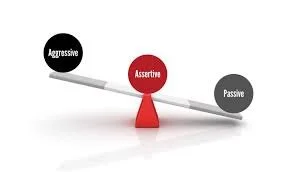
When we are passive, it sends the message to others that their needs are more important than our own. When we are aggressive, it sends the message to others that our needs are more important than theirs. When we are assertive, it sends the message to others that both needs matter and we can work together to come to a resolution. Obviously, assertiveness may look like the best option, but often in life it can be difficult to prioritize ourselves when we find ourselves in situations where our loved ones need support too! A way to mitigate this is assertiveness training and conflict resolution. For instance, let's say you get into a conflict with your partner, you can validate their feelings (paraphrase what they have said or what you understand to be what they are experiencing) and think about how the situation can be resolved in a way that meets both of your needs.
Another point to consider is how you set boundaries with others. What is your boundary type? A passive person tends to have porous boundaries, this type of boundary allows anyone to get close, is overly trusting, overshares, has difficulty saying no, avoids conflicts, and is quick to adopt other people's opinions. On the other hand, someone who is more aggressive may have rigid boundaries which has characteristics of being guarded, says no often, keeps people at a distance, has inflexible personal values and communicates aggressively. When you have healthy boundaries you are selective about who is close to you, you build trust with time, you share information appropriately, say no when needed, and accept conflict as it is a normal part of life.
Another method to help build assertiveness is using the conflict resolution model: You start with getting into your wise mind, this can mean going out for a walk to clear your thoughts, working out to burn off steam, or journaling in order to express your thoughts and feelings. Another way to say this, is going from your emotional heightened state to a calmer state where you are able to think clearly. Next, you identify the main issue that you are facing in a way that is as neutral as possible. This can be your sentence starter. I am upset because________, they are upset because__________. After this, you identify your beliefs and values according to the situation. Perhaps, there is a difference in values and this may be the reason for the conflict. After all, our values and beliefs can influence our day to day life and what we feel is most important. If someone is challenging our values whether directly or indirectly, this can feel incredibly unsettling and upsetting. However, when we can understand how our values and beliefs may differ from the other person we can take an empathetic stance which allows for understanding and the celebration of our differences. Next, decide if this is something which is worth resolving with the other person. Will this affect me in the future? Will this affect the other person? Now that I am in my wise mind, does the situation need a resolution or just a simple apology? Will the other person be receptive to my thoughts and feelings? Lastly, speak with the other person about the conflict by addressing the conflict, communicating your needs, validating their needs, and coming to an appropriate resolution that both parties can agree on.
Golshiri et al (2023) found that self esteem and mental health improved for high school students when they participated in assertiveness training. Assertiveness is essentially giving ourselves the grace to create boundaries, have self compassion, and show others that our wellbeing is valuable. Assertiveness is not a skill that comes naturally to everyone and that is okay. Sometimes unhealthy patterns that shaped us as children may emerge in adulthood. For example, Celik & Odaci (2012) found that childhood abuse can be a predictor of submissive behavior in adults. When we are treated poorly, this can shape the way we treat ourselves and our expectations of others. If we were not given the appropriate love and support we needed when growing up, this can cause problems for our self esteem and can cause us to expect less from our current partners or family members. However, despite these odds there is hope for those who have suffered in their childhood. With inner child work, assertiveness training, and grace for yourself you can build healthier boundaries, and assert yourself when you need it most. Talk to one of our therapists and start your assertiveness journey today!
References
Çelik, Ç. B., & Odacı, H. (2012). The effect of experience of childhood abuse among university students on self-perception and submissive behavior. Children and Youth Services Review, 34(1), 200-204.
Doc Snipes. (2022, March 21). Anger Management: 10 session Cognitive Behavioral Therapy Protocol [Video]. YouTube. https://www.youtube.com/watch?v=fN4w4UWVZUg
Golshiri, P., Mostofi, A., & Rouzbahani, S. (2023). The effect of problem-solving and assertiveness training on self-esteem and mental health of female adolescents: a randomized clinical trial. BMC psychology, 11(1), 106.
