
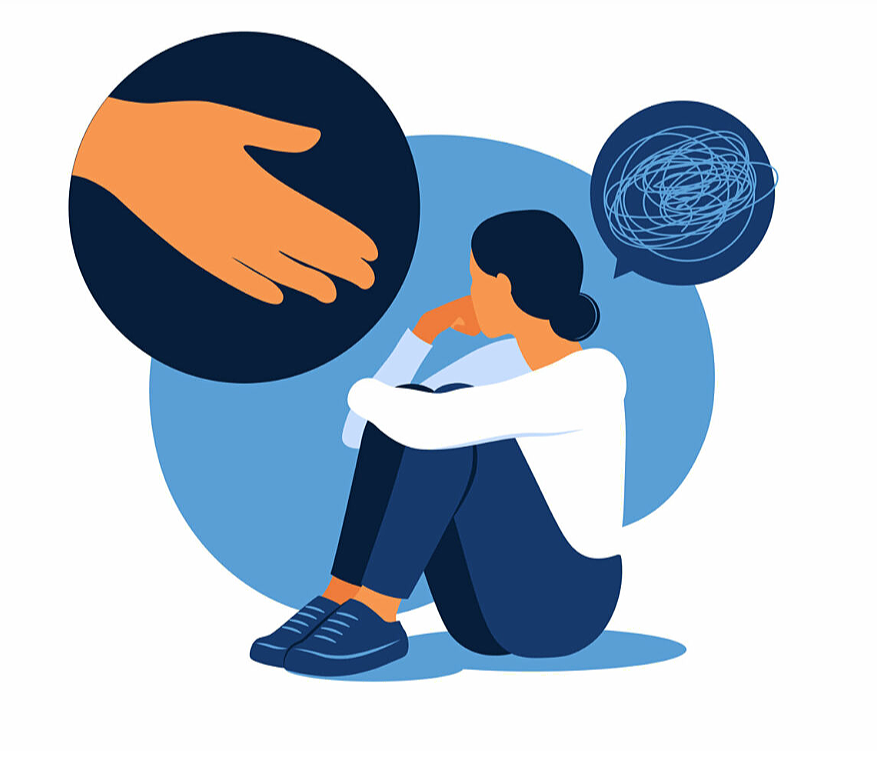
Life can feel overwhelming sometimes. Between work, school, relationships, family responsibilities, financial pressures, and everything in between, it can be difficult to find time to slow down and check in with yourself.
You may be getting through your day, showing up for work, keeping up with responsibilities, and appearing completely fine to the people around you, while internally feeling exhausted, anxious, or overwhelmed. You might find yourself constantly overthinking, worrying about what could go wrong, struggling to relax, or feeling like your mind never really switches off.
If this sounds familiar, you are not alone. Stress and anxiety are common experiences, and they can affect anyone at different points in their lives. Counselling can provide a supportive space to better understand what you are experiencing, develop healthier ways of coping, and work toward feeling more in control of your life.
At Vaughan Counselling & Psychotherapy and Zormin Counselling & Psychotherapy, individuals all across the GTA can access support from therapists with different areas of experience and therapeutic approaches.
Understanding Stress and Anxiety
Stress is a natural response to situations that feel demanding or challenging. In many situations, experiencing some level of stress can be a normal part of life. However, when stress becomes persistent, it can begin to affect our emotional and physical well-being.
According to the World Health Organization (2026), prolonged or excessive stress can contribute to difficulties with concentration, sleep, mood, and overall well-being. People experiencing ongoing stress may also notice physical symptoms such as muscle tension, headaches, stomach discomfort, or changes in their energy levels.
You may notice that you are:
Constantly thinking about everything you need to do
Having difficulty concentrating
Feeling irritable or emotionally drained
Experiencing muscle tension or physical restlessness
Having difficulty falling or staying asleep
Feeling overwhelmed by everyday responsibilities
Finding it difficult to relax, even when you have time to do so
Avoiding situations because they feel uncomfortable or overwhelming
Frequently questioning whether you are doing enough or making the right decisions
The World Health Organization (2025) describes anxiety as involving excessive fear or worry and notes that anxiety can affect behaviour and physical functioning, including sleep and concentration.
Anxiety can look different from person to person. For some, it may feel like racing thoughts or constant worry. For others, it may show up as perfectionism, people-pleasing, avoidance, difficulty setting boundaries, or an ongoing feeling that something is wrong.
Sometimes, people do not recognize that what they are experiencing may be connected to anxiety because they have become so used to functioning that way.
Why Can Life Feel So Overwhelming?
There is no single reason someone may experience stress or anxiety.
You may be navigating a demanding career while maintaining relationships and family responsibilities. You may be a student trying to manage academics, work, and your personal life. You may be going through a major transition such as graduating, starting a new job, moving, getting married, becoming a parent, or ending a relationship.
For others, stress may be connected to cultural or family expectations, uncertainty about the future, or feeling caught between different parts of their identity.
Sometimes there is not one major event that explains why you feel overwhelmed. Instead, it may be the accumulation of smaller stressors over time.
How Can Counselling Help?
One of the benefits of counselling is having a space that is specifically dedicated to you.
You do not have to organize your thoughts perfectly before coming into therapy. You also do not need to have everything figured out before asking for support.
Therapy can be an opportunity to slow down and explore what is happening beneath the surface.
For someone experiencing anxiety or chronic stress, counselling may involve identifying patterns in your thoughts, emotions, and behaviours. For example, you might notice that you tend to assume the worst possible outcome, put significant pressure on yourself, or avoid situations that make you uncomfortable. Becoming aware of these patterns can be an important step toward developing different ways of responding.
Counselling can also help you develop practical strategies for managing stress and regulating difficult emotions. Depending on your needs and goals, therapy may focus on coping skills, boundaries, communication, self-esteem, problem-solving, mindfulness, or developing a healthier relationship with your thoughts.
Finding the Right Therapeutic Approach
There is no single approach to therapy that works for everyone. Your therapist may draw from a range of therapeutic approaches and tailor their work to your individual concerns, goals, and preferences. The approaches below are just a few examples of the therapeutic modalities that may be incorporated into counselling:
Cognitive Behavioural Therapy (CBT) focuses on the connection between our thoughts, feelings, and behaviours. It can be particularly helpful for identifying unhelpful thinking patterns and developing more balanced and adaptive ways of responding (Carpenter et al., 2018).
Person-centred therapy places emphasis on creating a supportive, accepting, and non-judgmental environment where clients can explore their experiences at their own pace. Rather than positioning the therapist as the person with all the answers, the approach emphasizes collaboration, empathy, and respect for the client’s own experiences and capacity for growth (Silvester & Rankine, 2024).
Mindfulness-based approaches can help individuals become more aware of their thoughts, emotions, and physical sensations without immediately reacting to them. Research has found that mindfulness-based therapy can be associated with improvements in anxiety and mood symptoms (Li et al., 2021).
Solution-focused approaches emphasize clients’ strengths, resources, and goals while focusing on meaningful changes they would like to make moving forward. Research suggests that Solution-Focused Brief Therapy (SFBT) can be helpful across a range of psychological and psychosocial concerns (Żak & Pękala, 2025).
The clinic’s services are not limited to these approaches. The goal is not to find a "perfect" therapy method. Instead, therapy should be responsive to the individual. Your therapist can work with you to determine what approaches and strategies best fit your concerns, preferences, and goals.
Working With the Therapists Zormin/Vaughan Counselling and Psychotherapy
At Zormin and Vaughan Counselling and Psychotherapy, counselling is approached as a collaborative and client-centred process. The clinic provides a supportive, non-judgmental space where clients can feel heard, respected, and understood while working through the concerns that are affecting their emotional well-being.
The therapists at the clinic support clients with a range of concerns, including anxiety, stress, self-esteem, life transitions, relationship difficulties, and other emotional challenges. Each client brings their own experiences, values, culture, relationships, and personal goals into therapy, which is why counselling is not a one-size-fits-all process.
Finding a therapist you feel comfortable with is an important part of the counselling process. Research suggests that the collaborative relationship between therapist and client is meaningfully associated with psychotherapy outcomes (Flückiger et al., 2018).
As part of the Zormin & Vaughan Counselling and Psychotherapy team, Farina, Registered Psychotherapist (Qualifying), works with individuals experiencing concerns such as anxiety, stress, self-esteem challenges, life transitions, relationships, and emotional difficulties. Her approach is collaborative, client-centred, and strengths-based, incorporating CBT, mindfulness-based strategies, and solution-focused therapy while tailoring the counselling process to each client’s individual needs. Dr. Campoli is a Registered Clinical and Health Psychologist who also has experience treating anxiety, panic attacks and self-esteem challenges. She is trained in various evidence-based treatment models and provides both diagnostic assessment and psychotherapy.
You Don't Have to Wait Until You're in Crisis
One of the common misconceptions about therapy is that you need to be at your breaking point before seeking support.
Counselling can be helpful when you are struggling significantly, but it can also be valuable when you recognize that something in your life is not feeling right.
Maybe you have been feeling more anxious than usual. Maybe you are constantly overwhelmed and do not know how to slow down. Maybe you are entering a new chapter of your life and are unsure how to navigate it. Or maybe you simply want to better understand yourself and develop healthier ways of coping.
Seeking support does not mean that you are weak or unable to handle life on your own. Reaching out for support can be one way of taking your emotional well-being seriously. The World Health Organization recommends seeking support when stress or anxiety becomes difficult to manage or begins interfering with everyday life.
Finding Counselling Support in the GTA.
If you are looking for counselling in Vaughan, Toronto, Mississauga, Richmond Hill or virtually, Vaughan Counselling and Psychotherapy offers access to a team of therapists who support clients with a variety of concerns and goals.
Whether you are experiencing anxiety, stress, relationship difficulties, low self-esteem, life transitions, or other emotional challenges, finding a therapist you feel comfortable with can make an important difference.
You do not need to have everything figured out before reaching out. Sometimes, the first step is simply saying, "I'd like some support." From there, therapy can become a space to slow down, understand yourself more deeply, develop new coping strategies, and work toward meaningful change.
If you have been feeling overwhelmed, you do not have to navigate it alone. Support is available, and taking the first step can begin with a conversation.
References
Carpenter, J. K., Andrews, L. A., Witcraft, S. M., Powers, M. B., Smits, J. A. J., & Hofmann, S. G. (2018). Cognitive behavioral therapy for anxiety and related disorders: A meta-analysis of randomized placebo-controlled trials. Depression and Anxiety, 35(6), 502–514. https://doi.org/10.1002/da.22728
Flückiger, C., Del Re, A. C., Wampold, B. E., & Horvath, A. O. (2018). The alliance in adult psychotherapy: A meta-analytic synthesis. Psychotherapy, 55(4), 316–340. https://doi.org/10.1037/pst0000172
Li, J., Cai, Z., Li, X., Du, R., Shi, Z., Hua, Q., Zhang, M., Zhu, C., Zhang, L., & Zhan, X. (2021). Mindfulness-based therapy versus cognitive behavioral therapy for people with anxiety symptoms: A systematic review and meta-analysis of randomized controlled trials. Annals of Palliative Medicine, 10(7), 7596–7612. https://doi.org/10.21037/apm-21-1212
Silvester, S.-J. E., & Rankine, R. (2024). Neurodiversity-affirming school counselling: Supporting neurodivergent student wellbeing with person-centred therapy. Journal of Psychologists and Counsellors in Schools, 34(3), 266.
World Health Organization. (2025, September 8). Anxiety disorders. https://www.who.int/news-room/fact-sheets/detail/anxiety-disorders
World Health Organization. (2026, March 30). Stress. https://www.who.int/news-room/questions-and-answers/item/stress
