
How Comparing Yourself to Others Affects Your Mental Health
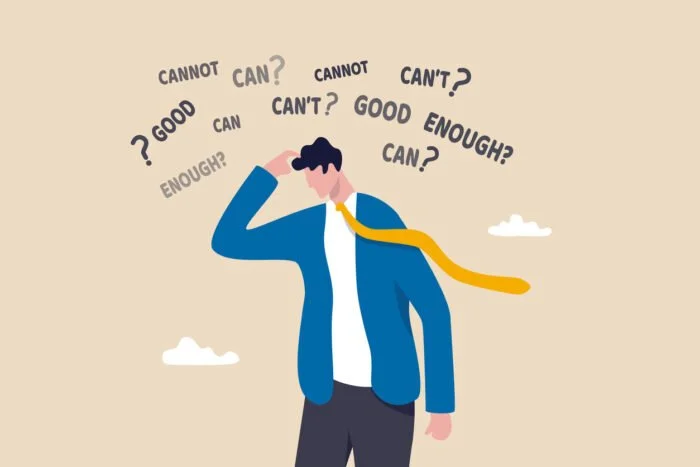
Have you ever opened social media just to “take a quick break” and within minutes, you are questioning your entire life? Maybe you see someone landing a job, getting into grad school, traveling, or seemingly “figuring it all out” and suddenly a quiet thought shows up: What am I doing with my life? Or maybe it is more subtle. You don’t even fully notice it, but your mood shifts. You feel a little heavier, a little more uncertain, a little less confident than you did a few minutes ago. If that feels familiar, you are not alone. Comparison is something most of us experience daily, but we don’t always realize how it can shape our mental health.
What Is Social Comparison?
As humans, we naturally evaluate ourselves in relation to others. This can show up as comparing our achievements, appearance, relationships, or progress in life. Sometimes, we compare ourselves to people we perceive as doing better and other times to those we perceive as doing worse. Comparison itself is not inherently harmful. In some cases, it can even be motivating or help us reflect on what we want. However, when it becomes frequent and tied to our sense of self-worth, it can start to negatively impact how we feel about ourselves.
How Comparison Affects Mental Health
In today’s world, comparison does not just happen occasionally. It is built into our daily routines, especially through social media. Research has found that engaging in negative social comparison on social media such as Facebook is associated with higher levels of depressive symptoms (Feinstein et al., 2013). This relationship is partly explained by rumination, meaning that people may repeatedly think about these comparisons, which can intensify negative emotions over time.
In addition, research suggests that comparing oneself to others’ abilities on social media is associated with lower identity clarity, suggesting that certain types of comparison may have a stronger impact on how we see ourselves (Yang et al., 2018). When people frequently evaluate themselves against others, it can become harder to feel confident in who they are and where they are going. Together, these findings highlight an important pattern. The more we engage in comparison, especially with idealized versions of others, the more likely we are to feel inadequate, uncertain, or disconnected from ourselves.
Part of the issue is that we are often comparing ourselves to incomplete information. On social media, we tend to see:
Highlight reels instead of everyday struggles
Achievements without the effort or setbacks behind them
Carefully curated moments rather than the full picture
Yet our brain often treats these snapshots as reality. Over time, this can lead to
automatic thoughts like:
I am falling behind
Everyone else is doing better than me
I should be further along by now
When these thoughts repeat, they can reinforce deeper beliefs about not being “good enough,” which are often associated with anxiety and low self-esteem.
Why We Keep Comparing
Even when comparison makes us feel worse, it can be hard to stop. That is because comparison serves a purpose. As humans, we are wired to evaluate ourselves in relation to others. Comparison can help us understand our goals, measure progress and make sense of where we stand. However, it becomes harmful when it shifts from a tool for reflection to a measure of self-worth.
In environments where we are constantly exposed to others’ achievements, such as social media, academic settings, or career-focused spaces, it becomes easy to internalize unrealistic timelines. This can create pressure to “keep up,” even when those expectations do not align with our own values or circumstances.
What You Can Do Instead
The goal is not to eliminate comparison completely. That is not realistic. Instead, it is about changing how you respond to it.
1. Notice when comparison is happening
Pay attention to when you tend to compare the most. Is it while scrolling? After seeing certain posts? Awareness helps you step out of autopilot.
2. Create distance from the thought
When you notice a thought like “I’m behind,” try reframing it as: “I’m having the thought that I’m behind.” This creates space between you and the thought, making it easier to respond rather than react.
3. Reality check what you are seeing
Remind yourself that you are often comparing your full life to someone else’s highlight reel. Ask yourself what you might not be seeing.
4. Shift from judgment to curiosity
Instead of asking, “Why am I not there yet?” try asking, “What matters to me right now?” This brings your focus back to your own values and priorities.
5. Reconnect with your own pace
Everyone’s path looks different. Your timeline is shaped by your experiences, circumstances and goals, not someone else’s.
6. Be intentional about your environment
If certain spaces consistently trigger comparison and leave you feeling worse, it is okay to create distance. This is not avoidance. It is being mindful of what you expose yourself to.
7. Practice self-compassion
When comparison shows up, try responding with understanding rather than criticism. “It makes sense that I feel this way right now.” This can reduce the intensity of negative thoughts and create a more supportive inner dialogue.
A Gentler Way Forward
Comparison is a deeply human experience. It does not mean something is wrong with you. It means your mind is trying to understand where you stand in the world. But when comparison becomes constant and tied to your worth, it can quietly impact how you see yourself and your life. The more you notice these patterns, the more choice you have in how you respond. You do not have to measure your life against someone else’s highlight reel. Growth does not follow a single timeline and progress does not always look visible from the outside. You are allowed to move at your own pace and that pace is still valid.
References:
Feinstein, B. A., Hershenberg, R., Bhatia, V., Latack, J. A., Meuwly, N., & Davila, J. (2013).
Negative social comparison on Facebook and depressive symptoms: Rumination as a
mechanism. Psychology of popular media culture, 2(3), 161.
Yang, C. C., Holden, S. M., & Carter, M. D. (2018). Social media social comparison of ability
(but not opinion) predicts lower identity clarity: Identity processing style as a mediator. Journal of
youth and adolescence, 47(10), 2114-2128.
